
For many guests, the most unforgettable whale watching moment isn’t a dramatic breach or a powerful tail slap.
It’s seeing a mother whale travelling alongside her calf.
Each year, thousands of humpback whales migrate along Australia’s east coast. During the southbound migration, many females return from breeding grounds with newborn calves by their side.
These encounters are among the most heartwarming wildlife experiences the Gold Coast has to offer.
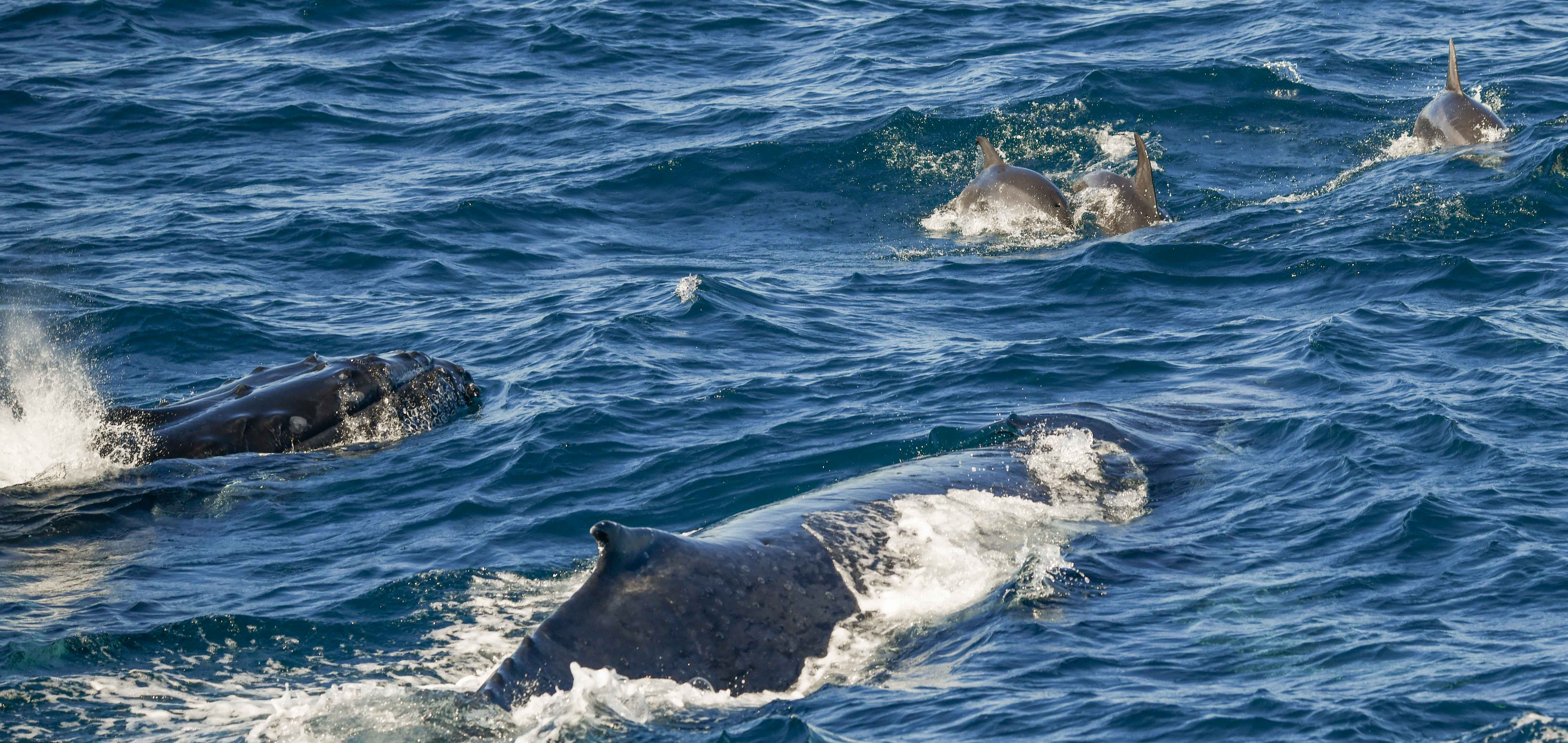
Why Do Humpback Whales Travel With Their Calves?
Humpback whales spend the winter months in warmer northern waters where calves are born.
Unlike the icy Antarctic feeding grounds, these warmer waters provide newborn whales with a safer environment during their earliest weeks of life.
Once calves become strong enough for the long journey south, they begin one of the world’s most extraordinary migrations alongside their mothers.
The journey can cover thousands of kilometres before reaching Antarctic feeding grounds.
When Can You See Mother and Calf Pairs on the Gold Coast?
The best opportunities typically occur during the southbound migration.
This generally runs from August through November.
During this period, female whales travel south with calves that are only a few months old.
Many visitors specifically choose late-season whale watching cruises for the chance to witness these family interactions.
Learn more about migration timing and the best months for whale watching on the Gold Coast.
How Big Is a Baby Humpback Whale?
The word “baby” can be misleading.
A newborn humpback whale calf can:
· Measure up to 5 metres long
· Weigh around 1 tonne
· Consume enormous amounts of milk each day
Even at birth, calves are larger than most cars.
Yet beside their mothers, which can exceed 15 metres in length, they appear surprisingly small.
What Behaviours Might You See?
Mother-and-calf encounters often involve behaviours that differ from those seen in adult whales.
Guests may witness:
Close Swimming Formations
Calves rarely stray far from their mothers.
This allows protection while also helping young whales learn migration routes.
Practice Breaches
Young whales frequently experiment with breaching and surface activity.
While not as spectacular as adult breaches, these playful attempts are often among the most memorable moments of a cruise.
Curious Behaviour
Calves can be naturally inquisitive.
They occasionally approach vessels more closely than adult whales, creating remarkable viewing opportunities.
Discover other fascinating whale behaviours commonly seen during migration season.
Why Are These Encounters So Special?
Many whale sightings are impressive.
Mother-and-calf encounters are emotional.
Watching a calf learn, explore, and travel beside its mother creates a connection that many guests remember for years.
It’s a reminder that migration isn’t simply a journey.
It’s a life cycle that has repeated itself for thousands of generations.
There is different wildlife that you can encounter in your cruise, learn more here Can You See Dolphins During Whale Watching on Gold Coast?
Do Mother Whales Protect Their Calves?
Absolutely.
Mother humpbacks are highly protective.
They position themselves between potential threats and their calves whenever necessary.
This protective behaviour is one reason whale watching regulations require vessels to maintain respectful distances.
Responsible whale watching allows guests to observe natural behaviour without disturbing the animals.
What Are the Chances of Seeing a Calf?
While no wildlife encounter can ever be guaranteed, calves are regularly spotted during the latter part of the migration season.
August, September, October, and November often provide excellent opportunities.
Learn more about whale sighting opportunities throughout the migration season.
Experience Mother and Calf Encounters Aboard the Sun Goddess
Every whale watching cruise is unique.
Some days feature spectacular breaches.
Others bring competitive pods or playful dolphins.
And on the most memorable days, guests witness a mother guiding her calf through one of nature’s greatest migrations.
These moments are impossible to script.
They’re also the reason so many visitors return to the Gold Coast whale watching season year after year.
Frequently Asked Questions
When is the best time to see whale calves on the Gold Coast?
August through November generally provides the best opportunities to observe mother-and-calf pairs during the southbound migration.
How old are whale calves when they reach the Gold Coast?
Most calves are only a few months old when they pass the Gold Coast alongside their mothers.
Are baby whales playful?
Yes. Young humpback whales often display curious and playful behaviour as they learn important skills during migration.
Do calves stay close to their mothers?
Almost always. Mothers provide protection, guidance, and support throughout the migration journey.
Can whale calves breach?
Yes. Young whales often practise breaching and other surface behaviours, although their attempts are usually smaller than those of adult whales.